
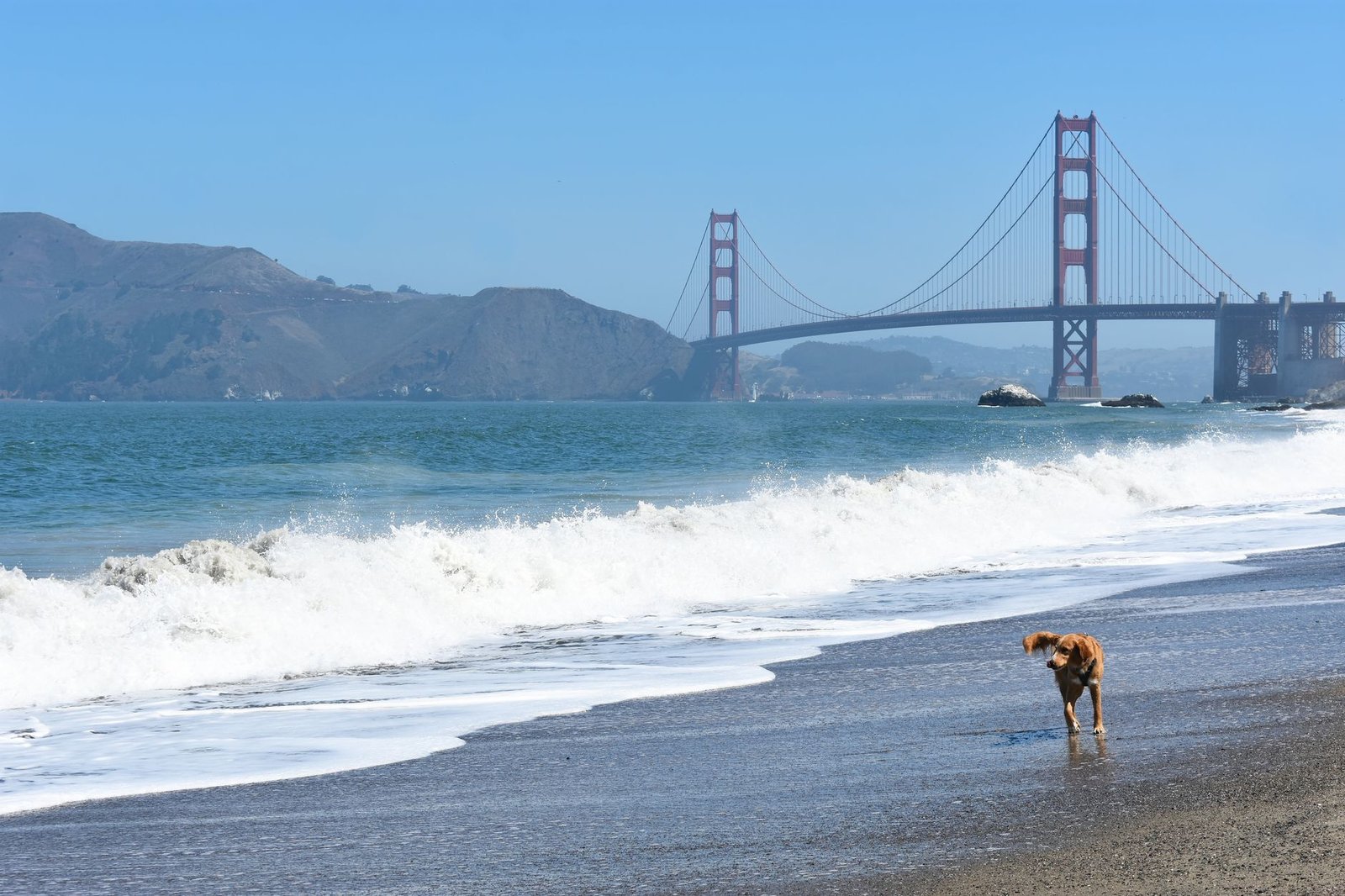
San Francisco runs backward from the rest of the country. Our warmest weather arrives in September and October, not July, and it arrives after a summer of fog that gave pets no chance to acclimate. That combination is why we see heat cases in fall, when owners have stopped thinking about it.
Why fall is the warm season here
The marine layer that keeps San Francisco cool through June, July and August weakens in the fall. The fog pulls back, the offshore winds arrive, and the city gets its clearest, warmest days of the year.
Most residents know this and still get caught out, because the calendar says otherwise. Nobody is thinking about heat safety on October 3rd. School has started, the light has changed, and the mental season has moved on even though the thermometer has not.
There is a second factor that matters more for pets than for people. A dog that has spent the whole summer in fifteen-degree fog has not acclimated to heat at all. When the temperature climbs twenty degrees over two days, that dog is far less prepared than a dog in a city with a normal hot summer. Acclimation takes one to two weeks of gradual exposure, and our weather does not provide it.
Ingleside and the neighborhoods on this side of the city also sit outside the foggiest belt, so we tend to run warmer than the Sunset or the Richmond on the same afternoon.
Which pets are most at risk
- Flat-faced breeds. Bulldogs, French bulldogs, pugs, boxers, Persians and Himalayans. Their airways are the main way a dog sheds heat and theirs work poorly. These dogs get into trouble at temperatures other dogs handle easily
- Overweight pets, who insulate themselves and generate more heat moving
- Older pets, and any pet with heart or airway disease
- Very young animals
- Thick or dark-coated dogs, which absorb more and shed heat more slowly
- Any dog that will not stop. Retrievers and working breeds keep going past the point of sense
What heat stress actually looks like
Panting is normal. Panting that does not slow when a dog rests in the shade is not.
Early signs, act now:
- Heavy panting that continues at rest
- Thick, ropey drool
- Bright red gums and tongue
- Slowing down, lagging, or lying down and refusing to move
- Seeking shade or cool surfaces persistently
- Anxious or restless behavior
This is an emergency, go now:
- Vomiting or diarrhea, particularly with blood
- Wobbliness, stumbling or collapse
- Confusion, glazed eyes, or not responding normally
- Gums that have gone pale, blue or gray
- Tremors or seizures
- Breathing that looks like real effort
Cats show it differently and are missed more often. A cat panting or breathing with its mouth open is always an emergency, heat or not. Also watch for drooling, restlessness, seeking tile floors and sinks, and unusual stillness.
What to do while you head in
- Get out of the heat immediately, into shade or air conditioning
- Wet the coat with cool water, particularly the belly, the inside of the legs, the armpits and the paws. Running water is better than a wet towel left in place
- Move air over the wet coat. A fan is what makes the water work
- Offer small amounts of cool water if your pet is alert and can drink. Do not force it
- Do not use ice or ice water. It constricts surface vessels and slows heat loss, which is the opposite of what you want
- Do not cover with a wet towel and leave it, which traps heat once the towel warms
- Head to our emergency care team and call on the way
A pet that seems to recover still needs to be seen. Heat injury damages the gut lining, the kidneys and the clotting system, and those problems appear hours later, which is why our medical services team will often want bloodwork and a period of monitoring rather than a quick look. A dog that cooled down and looks fine at 4 pm can be seriously unwell at 10 pm. This delayed pattern is the single most important thing to know.
The pavement, and the car
Asphalt on a clear San Francisco fall afternoon gets far hotter than the air. Put the back of your hand on it and hold it there for seven seconds. If you cannot, it will burn paw pads. Burns show up as limping, licking the feet, and pads that look darker, blistered or peeled, usually noticed the evening after the walk.
Walk early or after sunset, stick to grass and shaded sidewalks, and remember that a small dog is much closer to the radiating surface than you are.
On cars, the rule is simply do not. A parked car heats fast even on a mild day and even in shade with the windows cracked. California law allows a person to break a window to remove an animal in imminent danger, which tells you how the state views it.
Practical changes for a warm fall
- Check the forecast rather than the date. The calendar is the least reliable guide to San Francisco weather
- Move walks to early morning or evening on clear warm days
- Carry water and a collapsible bowl, and offer it before your dog looks like it needs it
- Keep sessions short for flat-faced breeds, and be firm about stopping. They will not self-regulate
- Never muzzle-restrict panting. Basket muzzles that allow full panting are fine; anything that holds the mouth closed is dangerous in heat
- Leave cool surfaces available indoors, and put a fan where your pet actually lies
- Watch apartments and back rooms, which hold heat long after the outside has cooled, particularly in the older buildings around here
- Keep water bowls full and in more than one room
Warm clear weather also brings dry grass, which is its own fall hazard here, and our guide to foxtails and your pet covers the one that arrives on the same afternoons.
Frequently asked questions
It is only 75 degrees. Is that really a problem?
It can be, and this is the misjudgment we see most. Risk depends on humidity, sun exposure, how long a pet is out, and how acclimated it is. After a foggy San Francisco summer, a bulldog on a sunny 75 degree afternoon is genuinely at risk. Judge by the animal in front of you rather than by the number.
My dog wants to keep playing, so he must be fine. True?
No, and this gets dogs into trouble more than anything else. Many dogs, especially retrievers and working breeds, will play past the point of danger. Enthusiasm is not a safety signal. You have to be the one who stops it.
Should I shave my dog for warm weather?
Usually not for double-coated breeds. That coat insulates against heat as well as cold and also protects from sunburn. A thorough deshedding to remove trapped undercoat is far more useful. For single-coated breeds a trim is reasonable. Ask us or your groomer about your specific dog.
He cooled down and seems completely normal. Do I still need a vet?
Yes, if he showed anything beyond mild panting. Heat injury affects the gut, kidneys and clotting, and those changes show up hours after the pet looks recovered. Being examined and told all is well is worth the visit.
Are cats at risk in San Francisco?
Less often than dogs, but yes, particularly in apartments that heat up during the day with the windows shut. Flat-faced cats and older cats are most vulnerable. A cat panting or breathing with its mouth open needs to be seen immediately regardless of the cause.
What is the safest time to walk during a warm spell?
Early morning, before the sun has been on the pavement, or well after sunset. Late afternoon is the worst window because the air feels like it is cooling while the ground is still radiating everything it absorbed.
Speak to the team at Ocean Avenue Veterinary Hospital
If your pet is panting heavily, unsteady or not recovering in the shade, call us now on (415) 586-5327. We are open 24 hours.
Published by the team at Ocean Avenue Veterinary Hospital.
This article is for general educational purposes only and is not a substitute for an in-person veterinary examination or advice about your individual pet. If you have an urgent concern about your pet, contact Ocean Avenue Veterinary Hospital or your nearest emergency veterinary hospital right away.
Ocean Avenue Veterinary Hospital
1001 Ocean Ave, San Francisco, CA 94112
Phone: (415) 586-5327
Hours: Open 24 hours, 7 days a week